

2026 Hyundai Tucson vs 2026 Honda CR-V: Which Compact SUV Should You Buy in Ontario?
2026 Hyundai Tucson vs 2026 Honda CR-V: Which Compact SUV Should You Buy in Ontario?
Posted on June 18, 2026
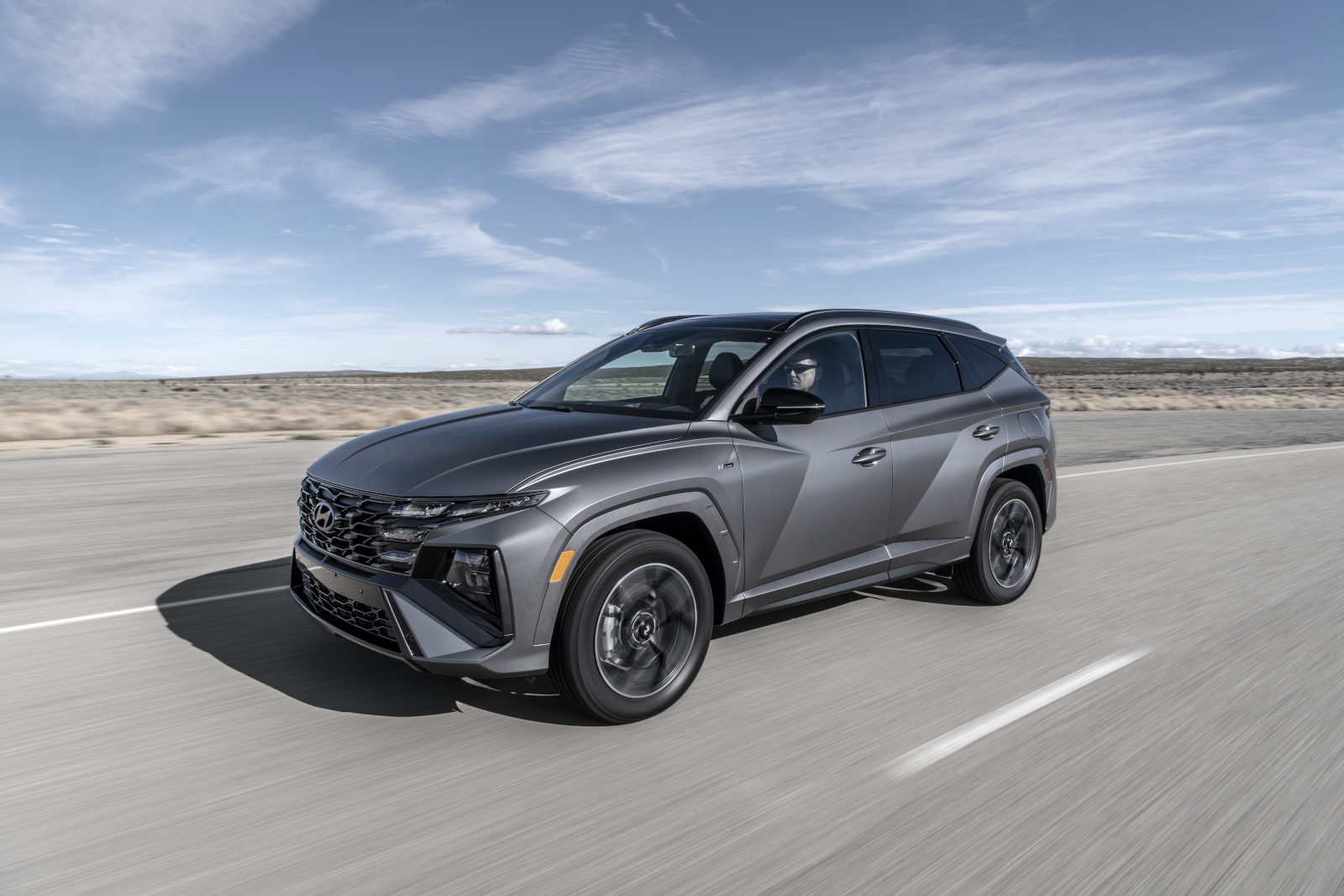
Compact SUV shopping in Ontario usually comes down to two names: Tucson and CR-V. Both fit family gear and daily commutes, but the details underneath separate them more than the badge on the tailgate.
This comparison looks at where the 2026 Hyundai Tucson pulls ahead, from trim-specific styling to a broader powertrain lineup, a bigger standard tech package, and coverage that keeps working long after the sale.
Tucson vs. CR-V: Side-by-Side Specs
The numbers below line up the two lineups on the categories that matter most day to day.
| Category | 2026 Hyundai Tucson | 2026 Honda CR-V |
| Standard drivetrain | HTRAC AWD standard on all five trims | FWD standard on LX; AWD standard from Sport up |
| Max towing | 3,500 lbs (1,588 kg) with the 2.5L engine | 1,499 lbs (680 kg) available on Sport |
| Hybrid engine output | 231 hp, 271 lb-ft combined (1.6T HEV) | 204 hp, 247 lb-ft combined (2.0L Hybrid) |
| Touchscreen | 12.3-inch standard, Preferred through N Line | 9-inch standard across the lineup |
| Digital cluster | 12.3-inch from Trend Package up | 7-inch on LX; 10.2-inch on Sport and hybrid trims |
| Base engine | 187 hp, 178 lb-ft (2.5L) | 190 hp, 179 lb-ft (1.5L turbo) |
1. Styling That Changes With the Trim
The 2026 Tucson lineup splits its road presence by trim. N Line gets an exclusive front bumper fascia and grille, a rear bumper with a diffuser, a unique spoiler, and a single twin-tip exhaust outlet. XRT wears its own 18-inch wheels and black front and rear skid plates for a rougher stance.
The CR-V pushes rugged design too: TrailSport Hybrid adds a silver skid garnish, black door handles, and an exclusive Ash Green Pearl paint colour. But Honda concentrates that personality in one trim, while Tucson spreads distinct looks across N Line and XRT, plus a cleaner face on Preferred and the top trim.
2. Three Powertrains and Standard AWD on Every Trim
Every 2026 Tucson trim comes with HTRAC AWD standard. The CR-V starts differently: LX is FWD, with AWD standard only from Sport up and across the hybrid trims.
Tucson’s base 2.5L makes 187 hp and 178 lb-ft with an 8-speed automatic, a few horsepower behind the CR-V’s 190-hp, 179-lb-ft 1.5L turbo and CVT, but the gap disappears once you move to the hybrid. The 1.6T Hybrid combines for 231 hp and 271 lb-ft through a 6-speed hybrid automatic, well ahead of the CR-V Hybrid’s 204 hp and 247 lb-ft on its E-CVT.
The 1.6T Plug-in Hybrid, optional on the top trim, adds 51 km of electric range and 268 hp and 271 lb-ft combined, a powertrain the CR-V lineup doesn’t have. The CR-V Hybrid does sip slightly less fuel at 6.4 L/100 km combined on Sport Hybrid and Touring Hybrid, but the Tucson Hybrid answers with more power on the same regular-unleaded fill-up.
On towing, the Tucson’s 2.5L is rated to 3,500 lbs (1,588 kg), well past the CR-V Sport’s available 1,499 lbs (680 kg).
3. A Tech Stack That Starts Bigger
Tucson’s 12.3-inch touchscreen is standard on Preferred through N Line, and the top trim adds a 12.3-inch screen with navigation. The CR-V’s touchscreen holds at 9 inches across its entire lineup.
The gap repeats on the gauge cluster: Tucson’s 12.3-inch digital display arrives once you step up to the Trend Package, while the CR-V’s cluster is 7 inches on LX and 10.2 inches on Sport, TrailSport Hybrid, Sport Hybrid, and Touring Hybrid.
Honda does make its wireless phone charger standard across the CR-V lineup, but Tucson answers from the Trend Package up with Hyundai Digital Key 2, which uses NFC, Bluetooth, and ultra-wideband so your phone can replace the key entirely.
- 12.3-inch touchscreen standard on four of five Tucson trims
- 12.3-inch digital cluster from Trend Package up
- Wireless Apple CarPlay and Android Auto, wired and wireless, on every trim
- Hyundai Digital Key 2 available from Trend Package up
4. Backed by a Longer Ownership Runway
Hyundai backs the 2026 Tucson with a 3-year/60,000 km new vehicle limited warranty, a 5-year/100,000 km powertrain warranty, and 5-year/100,000 km roadside assistance. Corrosion perforation coverage runs 6 years/160,000 km.
That coverage carries extra weight on the 1.6T Hybrid and Plug-in Hybrid, where the electric motor, battery, and added electronics sit under the same powertrain warranty as the gas engine, not a separate shorter clock.
Finding the Right 2026 Tucson Trim for You
If you want the lowest entry point with full-time AWD, Preferred pairs the 2.5L engine with HTRAC standard, no upgrade required.
If a rougher-terrain look matters, XRT layers black skid plates and its own 18-inch wheels onto that same drivetrain.
If you want the hybrid’s extra power, N Line’s 231-hp combined output and sport-tuned bumpers make the case.
If plug-in flexibility fits your commute, the top trim’s optional plug-in hybrid adds 51 km of electric range on top of 268 hp combined, plus the 12.3-inch navigation screen and head-up display.
See the 2026 Tucson at Guelph Hyundai
The 2026 Tucson pairs standard HTRAC AWD with three distinct powertrains, a 12.3-inch tech layout that starts higher in the lineup than most compact SUVs, and warranty coverage that extends through the powertrain and roadside assistance alike.
Visit Guelph Hyundai in Guelph to sit in a Preferred, XRT, N Line, or top-trim Tucson and find the version that matches how you drive. Book a test drive and feel the difference HTRAC AWD makes on the road.