

2026 Hyundai Tucson vs 2026 Toyota RAV4: Why the Tucson Leads in Three Key Areas
2026 Hyundai Tucson vs 2026 Toyota RAV4: Why the Tucson Leads in Three Key Areas
Posted on December 12, 2025
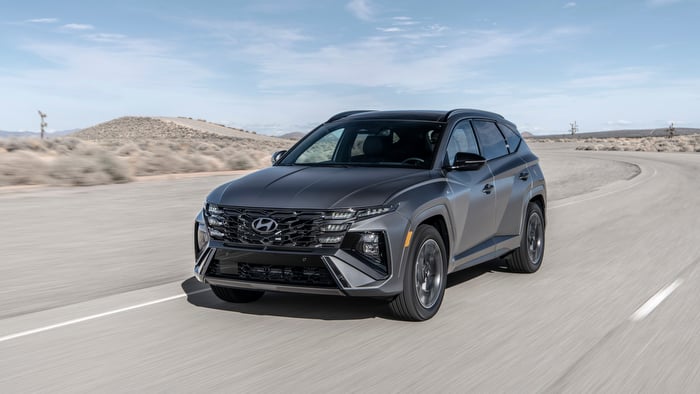
Choosing between two of Canada's most popular compact SUVs means weighing what matters most to your daily drive. The 2026 Hyundai Tucson and 2026 Toyota RAV4 both deliver all-wheel drive capability, hybrid efficiency, and modern technology - but they take different approaches to getting you where you need to go. Here's how the Tucson stands out in three areas that matter to drivers across Ontario.
Both models have been completely redesigned for 2026, bringing fresh styling, updated powertrains, and advanced safety features to the compact SUV segment. Understanding where each excels helps you make the right choice for your lifestyle.
Standard Hybrid Power Across the Lineup
The 2026 Hyundai Tucson offers three distinct powertrain options to match different driving needs. The Preferred and Preferred with Trend Package trims feature a 2.5 L 4-cylinder gasoline engine producing 187 hp and 178 lb-ft of torque, paired with an 8-speed automatic transmission. For drivers seeking enhanced efficiency, the N Line and top-tier trims come standard with a 1.6 L turbo hybrid system delivering a combined 231 hp. The top trim also offers an available 1.6 L turbo plug-in hybrid variant with 268 hp and an all-electric range of 51 km.
The 2026 Toyota RAV4 takes a different approach by offering only hybrid powertrains across its entire Canadian lineup. Every RAV4 features Toyota's fifth-generation hybrid system with a 2.5 L 4-cylinder engine producing a combined 236 hp. Select Sport grades - including the SE, XSE, and new GR SPORT - offer an available plug-in hybrid system with up to 320 hp and an estimated 80 km of all-electric range.
At a Glance: Powertrain Options
| Feature | 2026 Hyundai Tucson | 2026 Toyota RAV4 |
| Base Powertrain | 2.5 L Gas (187 hp) | 2.5 L Hybrid (236 hp) |
| Hybrid Availability | Standard on N Line/top trim | Standard on all trims |
| PHEV Availability | Top trim only | Sport grades only |
| PHEV Power Output | 268 hp | Up to 320 hp |
| PHEV Electric Range | 51 km | 80 km (estimated) |
The Tucson's powertrain flexibility gives buyers the option to choose a traditional gasoline engine at lower trim levels, which can reduce upfront costs while still delivering capable performance. The RAV4's all-hybrid approach means every buyer gets enhanced fuel efficiency from the start, with combined ratings of 5.5 L/100 km on the LE AWD compared to the Tucson's 2.5 L AWD at 8.8 L/100 km combined.
Technology That Adapts to Your Needs
Both SUVs introduce new multimedia systems for 2026, but they differ in screen size and feature availability across trim levels. The Tucson Preferred starts with a 12.3-inch touchscreen running Hyundai's ccNC lite infotainment system, paired with a 4.2-inch colour gauge cluster. Moving up to the Preferred with Trend Package brings a 12.3-inch digital gauge cluster, wireless charging, and Digital Key 2 technology. The top trim upgrades to a full navigation system with head-up display.
The RAV4 LE AWD begins with a 10.5-inch touchscreen and a standard 12.3-inch digital gauge cluster across all trims. The Limited and XSE Technology Package grades step up to a 12.9-inch touchscreen with integrated navigation. Toyota's new multimedia system debuts 5G connectivity and the Arene software platform, which powers the latest Toyota Safety Sense 4.0 suite.
Both vehicles offer wireless Apple CarPlay and Android Auto compatibility, dual Bluetooth phone connectivity, and USB-C charging ports. The Tucson N Line and top trim feature interior ambient lighting with 64 colour options, while the RAV4 XSE and GR SPORT grades include sport-focused interior accents and unique seating surfaces.
Interior Space and Versatility
Dimensions tell part of the story when comparing these compact SUVs. The Tucson measures 4,640 mm in length (4,650 mm for N Line) with a 2,755 mm wheelbase. The RAV4 Core and most Sport models measure 4,595 mm in length, while the Woodland and GR SPORT stretch to 4,620 mm - all with a 2,690 mm wheelbase.
Inside, the Tucson offers 1,052 mm of front legroom and 1,050 mm of rear legroom across most trims. The top-tier PHEV variant reduces rear legroom slightly to 1,004 mm to accommodate the larger battery pack.
Front headroom ranges from 1,019 mm on the Preferred to 968 mm on higher trims with the panoramic sunroof. The RAV4 emphasizes cargo flexibility with 60/40 split fold-flat rear seats and thoughtful in-cabin storage solutions. The Woodland grade adds modular side IP storage units for outdoor gear organization.
Interior Comfort Features
Tucson Preferred:
- Premium cloth seats
- 8-way power driver's seat with lumbar support
- Heated front seats
- Dual-zone automatic climate control
RAV4 LE AWD:
- Fabric upholstery
- Heated front seats
- Two-zone automatic climate control
- Smart Key System with push-button start
Tucson Top Trim:
- Leather seats
- 8-way power front seats with memory system
- Ventilated front seats
- Heated rear seats
RAV4 Limited AWD:
- Heated and ventilated power-adjustable front seats with memory
- Heated rear seats
- Panoramic moonroof
Both vehicles provide comfortable seating for five adults with ample shoulder room and hip room. The Tucson's available ventilated front seats on the top trim offer an advantage during hot Ontario summers, while the RAV4's standard heated rear seats on the Limited grade extend comfort to back-seat passengers during winter months.
Safety Systems Designed for Canadian Roads
The 2026 Hyundai Tucson comes standard with Forward Collision-Avoidance Assist featuring pedestrian, cyclist, and junction-turning detection. Lane Following Assist and Lane Keeping Assist work together to help maintain proper lane position, while Blind-Spot Collision Warning and Rear Cross-Traffic Collision-Avoidance Assist monitor surrounding traffic. All trims include Adaptive Cruise Control with stop-and-go capability, except the top trim which upgrades to Adaptive Cruise Control 2.
The top trim adds Highway Driving Assist, Blind View Monitor, Surround View Monitor, and Remote Smart Parking Assist. Parking Distance Warning covers forward, side, and reverse directions, complemented by Parking Collision-Avoidance Assist for the rear.
The 2026 Toyota RAV4 debuts Toyota Safety Sense 4.0, powered by the new Arene software platform. Standard features include Pre-Collision System with enhanced detection capabilities, Lane Tracing Assist, and Blind Spot Monitor with Rear Cross Traffic Alert. The Limited and XSE Technology Package grades add Traffic Jam Assist, Front Cross Traffic Alert with Braking, Lane Change Assist, and the Panoramic View Monitor.
Both SUVs comply with Canadian safety standards with multiple airbags, stability control systems, and tire pressure monitoring with individual tire indicators. The Tucson's eight airbags and the RAV4's advanced airbag system both provide comprehensive occupant protection.
Finding the Right Fit for Your Drive
The 2026 Hyundai Tucson delivers flexibility through its three powertrain choices, allowing buyers to select the right balance of performance and efficiency for their needs. Standard all-wheel drive across every trim ensures confident handling in Ontario's varied weather conditions, while the comprehensive suite of safety features provides peace of mind on every journey.
Technology integration reaches across the lineup, with even base trims receiving the 12.3-inch touchscreen and wireless smartphone connectivity. The available hybrid and plug-in hybrid options provide strong fuel economy for drivers ready to embrace electrified powertrains, while the 2.5 L gasoline engine offers a more traditional entry point.
Visit our team at Guelph Hyundai to explore the complete 2026 Tucson lineup and see which trim level matches your driving priorities.