

2026 Hyundai Venue or 2026 Hyundai Tucson: Key Differences for Ontario SUV Buyers
2026 Hyundai Venue or 2026 Hyundai Tucson: Key Differences for Ontario SUV Buyers
Posted on August 14, 2026
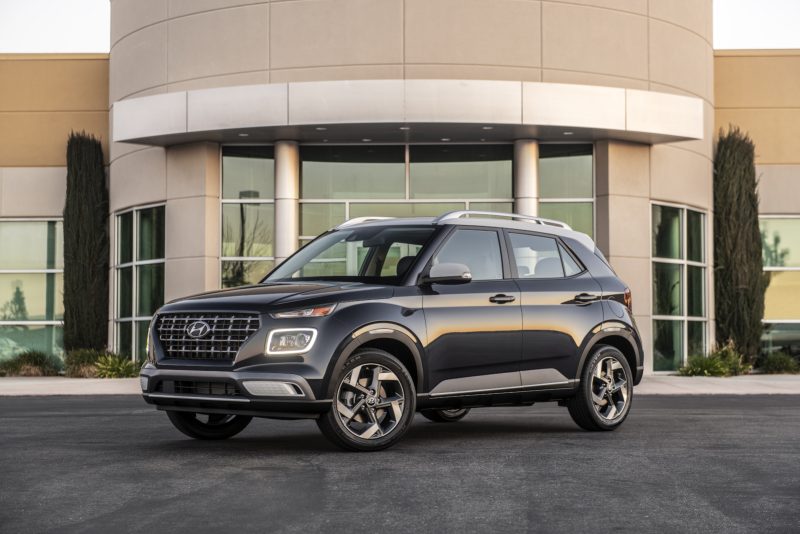
Ontario drivers cross-shop the Hyundai lineup for very different reasons. Some want a small SUV that slides into a tight parking spot on a busy street. Others need room for gear, passengers, and longer highway stretches.
The Venue and Tucson answer those needs in different ways. Both carry the Hyundai badge, but they are built around separate priorities: one keeps things simple and efficient around town, the other adds space, power, and standard all-wheel drive for a bigger household.
Venue vs Tucson at a Glance
The two SUVs share Hyundai’s core design language, but their sizing, power, and standard equipment set them apart quickly.
Body and Dimensions
| Spec | Venue | Tucson |
| Body style | Subcompact crossover SUV | Compact SUV |
| Length | 4,040 mm | 4,640 mm |
| Wheelbase | 2,520 mm | 2,755 mm |
| Ground clearance | 170 mm | 210 mm |
Powertrain and Efficiency
| Spec | Venue | Tucson |
| Engine | 1.6 L I4 | 2.5 L I4 (also 1.6 L turbo hybrid and plug-in hybrid) |
| Horsepower | 121 hp | 187 hp (gas); up to 268 hp combined (plug-in hybrid) |
| Torque | 113 lb-ft | 178 lb-ft (gas); up to 271 lb-ft combined (hybrid) |
| Drivetrain | FWD | AWD, standard on every trim |
| Combined fuel economy | 7.5 L/100 km | 8.8 L/100 km (gas); 6.7 L/100 km (hybrid) |
Cargo and Seating
| Spec | Venue | Tucson |
| Seating capacity | 5 | 5 |
| Rear-seat legroom | 870 mm | 1,050 mm |
| Cargo, seats up | 528 L | 1,095 L |
| Cargo, seats folded | 902 L | 2,119 L |
Size and Everyday Manoeuvrability
The Venue measures 4,040 mm long with a 5.1 m turning radius, numbers that make it easy to thread through narrow streets and tuck into compact parking spots. Its 170 mm of ground clearance keeps the ride low and easy to step into.
The Tucson stretches to 4,640 mm, a 600 mm jump that brings more sheet metal to manage but also a taller stance. Its 210 mm of ground clearance sits higher over curbs, rough shoulders, and uneven laneways.
If your daily drive is mostly city blocks and tight lots, the Venue’s smaller footprint is the easier fit. If you regularly haul a trailer, cross gravel, or just want a higher seating position, the Tucson’s added size pays off.
Cabin Room and Passenger Comfort
Front legroom is close between the two, at 1.05 m in the Venue and 1,052 mm in the Tucson. The real gap shows up in the back seat: the Tucson’s second row offers 1,050 mm of legroom against the Venue’s 870 mm, a 180 mm difference that matters once car seats, boosters, or taller passengers are involved.
Shoulder room follows the same pattern. The Venue measures 1.37 m up front and 1.365 m in the second row, comfortable for two adults but tighter for three across. The Tucson’s cabin gives rear passengers more room to stretch out on longer drives.
For solo commuters or couples, the Venue’s front seats deliver the same comfort as the Tucson’s. For carpool duty, growing families, or regular rear-seat passengers, the Tucson’s extra 180 mm of legroom changes how the back seat actually feels.
Powertrain, Efficiency, and Traction
The Venue runs a 1.6 L four-cylinder making 121 hp and 113 lb-ft, paired exclusively with front-wheel drive and a Smartstream IVT transmission. Combined fuel economy lands at 7.5 L/100 km, a number that reflects its lighter build and simpler drivetrain.
The Tucson pairs a 2.5 L four-cylinder producing 187 hp and 178 lb-ft with HTRAC all-wheel drive standard on every trim. A 1.6 L turbo hybrid version raises combined output to 231 hp and drops combined fuel economy to 6.7 L/100 km, actually bettering the Venue’s own number while adding all-wheel grip. A plug-in hybrid variant pushes combined output to 268 hp and adds 51 km of electric-only range from its 13.8 kWh battery.
The trade-off is straightforward. The Venue’s front-drive setup is lighter and easy to live with around town. The Tucson’s standard AWD adds traction on wet or snow-covered pavement, useful when Ontario roads turn slick through the colder months, without giving up efficiency once you step into the hybrid.
Cargo Room for Gear and Groceries
The Venue holds 528 L behind the rear seats and 902 L with them folded, enough for a grocery run, a stroller, or a couple of duffel bags. Its 60/40 split rear seats fold flat for bulkier items.
The Tucson holds 1,095 L behind the rear seats, 567 L more than the Venue, and 2,119 L with the seats folded, a 1,217 L gain. That extra room covers hockey bags, weekend luggage for a family, or a stroller alongside a full grocery haul without folding a single seat.
Comfort, Technology, and Everyday Convenience Features
Both SUVs come with heated front seats, a backup camera, Bluetooth hands-free calling, and wireless Android Auto and Apple CarPlay as standard equipment, useful on cold mornings and for daily connectivity alike. The Venue pairs those with an 8-inch touchscreen, automatic headlights, cruise control, Forward Collision-Avoidance Assist, all standard from its base trim. A heated steering wheel and proximity key with remote start arrive once you move up to the Preferred trim.
The Tucson equips most trims with a 12.3-inch infotainment display, while its range-topping trim swaps in a navigation-enabled version with a head-up display. A heated steering wheel, remote engine start, dual-zone automatic climate control, and adaptive cruise control with stop-and-go capability are standard across every Tucson trim, not reserved for a higher grade. Blind-spot detection indicators and a smart power liftgate are also part of the package on its more heavily equipped trims.
For buyers who want core comfort and safety features without climbing the trim ladder, the Venue delivers them from its base trim. For buyers who want that same equipment standard across the whole lineup, plus a bigger screen and adaptive cruise, the Tucson covers more ground before you even look at upgrades.
Which Hyundai Fits Your Drive?
For a solo commuter or a couple running errands and parking on narrow streets, the Venue’s smaller footprint, 7.5 L/100 km combined efficiency, and standard safety features cover daily driving without extra size to manage.
For a growing household hauling passengers, sports gear, and groceries in the same trip, the Tucson’s 180 mm of extra rear legroom, larger cargo hold, and standard AWD change the equation. Its hybrid option even improves on the Venue’s own fuel economy while adding that traction.
Both paths lead to a Hyundai. The right one depends on how much space and traction your week actually demands.
Exploring Venue and Tucson at Guelph Hyundai
The Venue and Tucson give Ontario drivers two ways into the Hyundai lineup, one built around city-friendly efficiency and a tighter footprint, the other around passenger room, cargo space, and standard all-wheel drive.
Visit Guelph Hyundai in Guelph to sit in both SUVs and compare their cabins, cargo areas, and features side by side. Book a test drive to feel which layout matches your daily routine.