

Comparing the 2026 Hyundai Tucson and 2026 Nissan Rogue
Comparing the 2026 Hyundai Tucson and 2026 Nissan Rogue
Posted on February 25, 2026
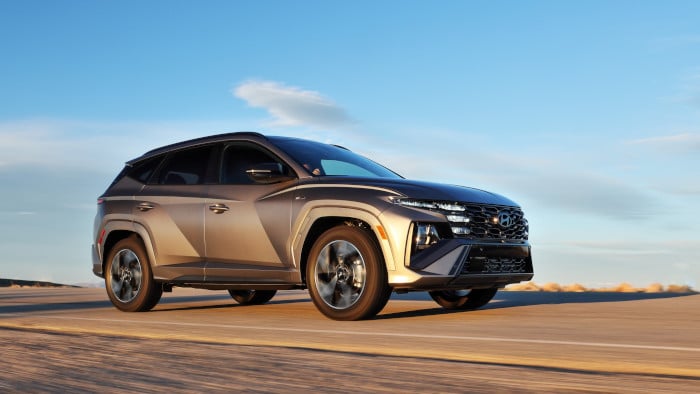
The compact SUV segment continues to offer families a pairing of practicality, technology, and efficiency. Two strong contenders in this space are the 2026 Hyundai Tucson and the 2026 Nissan Rogue. Both vehicles deliver standard all-wheel drive, modern features, and multiple powertrain options to suit different driving needs.
Understanding how these two SUVs compare can help you identify which vehicle aligns with your priorities. From fuel efficiency to interior space and technology, each offers distinct advantages worth exploring.
Powertrain Options and Efficiency
The 2026 Tucson offers three powertrain configurations. The Preferred and Preferred with Trend Package trims feature a 2.5L GDI 4-cylinder engine producing 187 hp, paired with an 8-speed automatic transmission. The N Line Hybrid and top Hybrid models use a 1.6L turbo hybrid system with a 6-speed hybrid automatic transmission and a 1.49 kWh battery. For drivers seeking maximum efficiency, the top Plug-in Hybrid combines the same 1.6L turbo engine with a larger 13.8 kWh battery, delivering combined fuel economy ratings of 6.7 L/100 km on gasoline or 3.1 L/100 km in electric mode.
The 2026 Rogue lineup includes gasoline models across S AWD, SV AWD, Rock Creek AWD, and Platinum AWD trims, with combined fuel economy ranging from 7.6 to 8.0 L/100 km depending on the trim. The Rogue also offers a Plug-in Hybrid variant, which arrived at dealerships in early 2026. Pricing shown reflects the price at the time of writing. Final pricing may vary.
Fuel Economy Comparison
| Metric | 2026 Tucson | 2026 Rogue |
| Best Combined (Gas) | 6.7 L/100 km (Hybrid) | 7.6 L/100 km |
| Standard Powertrain Combined | 8.8 L/100 km (2.5L) | 7.6 L/100 km |
| PHEV Combined | 6.7 / 3.1 L/100 km | Available |
The Tucson Hybrid delivers a combined rating of 6.7 L/100 km, while the standard gasoline Rogue models achieve 7.6 L/100 km combined in most trims. For drivers prioritizing efficiency, the Tucson's hybrid and plug-in hybrid options provide measurable advantages.
Interior Space and Cargo Capacity
Interior dimensions play a significant role in daily usability. The Tucson provides 1,052 mm of front leg room and 1,050 mm of rear leg room in the 2.5L and Hybrid models. The Plug-in Hybrid variant offers 1,004 mm of rear leg room due to battery placement. Cargo capacity varies by powertrain: 1,095 L behind the second row in the 2.5L models, 1,097 L in the Hybrid, and 902 L in the Plug-in Hybrid.
The Rogue Rock Creek edition features a wheelbase of 2,706 mm and an overall length of 4,648 mm. The Plug-in Hybrid model has a slightly shorter wheelbase of 2,705 mm and an overall length of 4,710 mm. Both vehicles offer five-passenger seating and practical interior layouts.
Technology and Comfort Features
The Tucson equips higher trims with a 12.3-inch digital cluster display, panoramic sunroof, and a Bose Premium Audio system with 8 speakers. Interior ambient lighting and an auto-dimming rearview mirror with HomeLink are standard on N Line and top models. The N Line Hybrid features sport seats with suede and leather surfaces, while the top trims offer full leather seating.
The Rogue SV Premium Package includes PrimaTex leatherette seats, rear door sunshades, rear heated seats, 19-inch alloy wheels, and the HD Intelligent Around View Monitor. The Plug-in Hybrid model adds leather-appointed seats, door illumination, and a machined-aluminum trim plate around the shifter. The Rock Creek edition enhances outdoor capability with all-terrain tires, a tubular roof rack with integrated cross bars, and Hill Descent Control.
Safety and Driver Assistance
Both vehicles include comprehensive safety systems. The Tucson comes standard with ABS with EBD, Electronic Parking Brake with Auto Vehicle Hold, and Trailer Sway Assist. A Tire Mobility Kit is included across all trims.
The Rogue Rock Creek edition features the HD Intelligent Around View Monitor with Off-Road view, which provides enhanced visibility when navigating challenging terrain. Hill Descent Control is also available on this trim, supporting controlled descents on steep grades.
Trim Levels and Configurations
The Tucson lineup includes Preferred, Preferred with Trend Package, XRT, N Line Hybrid, top Hybrid, and top Plug-in Hybrid. Each trim level offers distinct feature sets, with the N Line models showcasing sport-focused styling and the top trims delivering premium amenities.
The Rogue is available in S AWD, SV AWD, Rock Creek AWD, and Platinum AWD trims, with the Plug-in Hybrid offered as a separate model. The Rock Creek edition emphasizes rugged capability, while the Platinum trim focuses on luxury and refinement.
Driving Dynamics and Capability
The Tucson features HTRAC All-Wheel Drive with multi-terrain control modes for Snow, Mud, and Sand conditions. A column-mounted Shift-by-Wire gear selector with paddle shifters is standard across all trims. The suspension uses a MacPherson strut front and multi-link rear setup, with a turning radius of 5.9 metres.
The Rogue Rock Creek edition offers a ground clearance of 209.5 mm, an angle of approach of 19.0 degrees, and an angle of departure of 23.6 degrees. The Plug-in Hybrid model provides 200 mm of ground clearance. Both vehicles deliver confident handling and composed ride quality for daily driving and weekend adventures.
Learn More at Guelph Hyundai
The 2026 Hyundai Tucson delivers a strong combination of efficiency, technology, and versatility across its powertrain lineup. Whether you prioritize fuel economy, interior comfort, or advanced features, the Tucson offers configurations to match your driving needs.
Our team at Guelph Hyundai is ready to help you explore the Tucson lineup and find the trim that fits your lifestyle.