

Understanding Hyundai's 2026 Hybrid Vehicle Lineup
Understanding Hyundai's 2026 Hybrid Vehicle Lineup
Posted on December 22, 2025
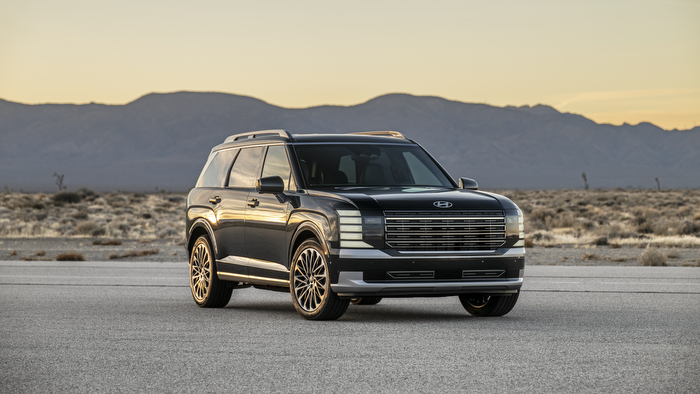
Hyundai's 2026 hybrid and plug-in hybrid lineup spans compact sedans to three-row SUVs, offering efficient powertrains across multiple segments. Each model reduces fuel consumption without compromising the versatility families expect. Whether navigating daily commutes or weekend adventures across Ontario, these electrified models deliver practical solutions for drivers seeking lower operating costs and reduced environmental impact.
Understanding the differences between hybrid (HEV) and plug-in hybrid (PHEV) technology helps you choose the right powertrain for your driving patterns. Hybrids combine a gasoline engine with an electric motor and small battery, switching between power sources to maximize efficiency. Plug-in hybrids expand this concept with larger batteries that can be charged from external sources, enabling pure electric driving for shorter trips while maintaining gasoline backup for longer journeys.
2026 Hyundai Tucson: Compact Versatility with Three Powertrain Choices
The Tucson stands out as Hyundai's most versatile compact SUV, offering buyers a choice between conventional gasoline, hybrid, and plug-in hybrid powertrains. Standard HTRAC All-Wheel Drive across all trims ensures confident handling in varied conditions, while compact dimensions make urban parking manageable without sacrificing passenger comfort.
The 2.5L naturally aspirated gasoline engine delivers 187 hp and 178 lb-ft of torque, paired with an 8-speed automatic transmission. This powertrain achieves 8.8 L/100 km combined fuel economy and serves as the foundation for Preferred and Preferred with Trend Package trims.
Hybrid technology arrives on N Line and Ultimate trims with a 1.6L turbo system producing 231 hp combined output and 271 lb-ft of torque. The 6-speed hybrid automatic transmission works with a 1.49 kWh lithium-ion battery to achieve 6.7 L/100 km across city, highway, and combined cycles. This delivers a 25% improvement in fuel economy compared to the gasoline variant, translating to meaningful savings over the vehicle's lifetime.
The plug-in hybrid option, exclusive to Ultimate trim, elevates output to 268 hp while maintaining the same 271 lb-ft torque figure. The 13.8 kWh battery enables 51 km of all-electric range, sufficient for many daily commutes without consuming gasoline. Combined fuel economy registers at 6.7 L/100 km when operating in hybrid mode, with an electric-only rating of 3.1 Le/100 km. The 7.2 kW onboard charger supports Level 2 charging at 240V.
Tucson Hybrid & PHEV Quick Reference:
- HEV Power: 231 hp combined / 271 lb-ft torque
- PHEV Power: 268 hp combined / 271 lb-ft torque
- HEV Fuel Economy: 6.7 L/100 km (all cycles)
- PHEV Electric Range: 51 km
- PHEV Charging: 7.2 kW onboard charger (240V)
2026 Hyundai Santa Fe Hybrid: Mid-Size Capability with Seven-Passenger Seating
The Santa Fe Hybrid brings electrification to Hyundai's mid-size SUV segment with standard HTRAC All-Wheel Drive and seating for up to seven passengers. The rugged exterior design pairs with refined interior materials, creating an environment suitable for both family transportation and outdoor adventures.
All Santa Fe Hybrid trims utilize a 1.6L turbo hybrid powertrain generating 231 hp and 271 lb-ft of torque through a 6-speed hybrid automatic transmission. The 1.49 kWh lithium-ion battery works continuously with the gasoline engine to optimize efficiency, achieving 6.9 L/100 km combined fuel economy. Highway efficiency registers at 7.0 L/100 km, while city driving achieves 6.9 L/100 km.
The wheelbase measures 2,815 mm, contributing to a spacious interior with 1,052 mm front legroom, 1,075 mm second-row legroom, and 761 mm third-row legroom. Cargo volume reaches 2,267 litres behind the first row, 1,148 litres behind the second row, and 413 litres behind the third row. Ground clearance measures 177 mm, providing adequate clearance for light off-road excursions.
Four trim levels span the lineup: Preferred Hybrid starts with 18-inch alloy wheels and cloth seating, Preferred with Trend Package adds 20-inch wheels and leatherette surfaces, Luxury introduces full leather and ventilated front seats, and Ultimate Calligraphy tops the range with 6-passenger seating featuring second-row captain's chairs, Nappa leather, and a Bose 12-speaker premium audio system.
Santa Fe Hybrid At a Glance:
| Feature | Specification |
| Powertrain | 1.6L Turbo Hybrid (231 hp / 271 lb-ft) |
| Transmission | 6-speed Hybrid Automatic |
| Fuel Economy | 6.9 L/100 km combined |
| Seating | 7 passengers (6 on Ultimate Calligraphy) |
| Cargo Volume | 413 L (3rd row) / 1,148 L (2nd row) / 2,267 L (1st row) |
2026 Hyundai Sonata Hybrid: Efficient Sedan for Daily Commuting
The Sonata Preferred Trend Hybrid brings hybrid efficiency to Hyundai's mid-size sedan lineup, offering an alternative to the standard 2.5L gasoline and turbocharged N Line variants. Front-wheel drive keeps the focus on fuel economy rather than all-weather traction, making this configuration ideal for drivers in urban and suburban environments.
The 2.0L GDI hybrid engine pairs with a 6-speed automatic transmission. The sedan maintains the Sonata's signature design elements, including 17-inch alloy wheels and a panoramic sunroof. Interior features mirror the gasoline Preferred Trend AWD specification, with heated and ventilated front seats, dual-zone automatic climate control, and a 12.3-inch digital infotainment touchscreen.
Drive Mode Select offers Normal, Sport, My Drive, and Snow settings, allowing drivers to prioritize efficiency or responsiveness based on conditions. Rear console ventilation ducts extend climate control comfort to rear passengers, a thoughtful detail for longer journeys.
2026 Hyundai Elantra Hybrid: Compact Efficiency with Premium Features
The Elantra Luxury Hybrid brings electrification to Hyundai's compact sedan segment as an optional powertrain on the Luxury trim. This configuration maintains the Elantra's sporty proportions while delivering improved fuel economy compared to the standard 2.0L engine.
The 1.6L GDI hybrid system generates 139 hp combined output with 195 lb-ft of combined torque, paired with a 6-speed EcoShift Dual-Clutch Transmission. Fuel economy achieves 4.7 L/100 km combined, with city consumption at 4.8 L/100 km and highway at 4.5 L/100 km. This marks the most efficient internal combustion option in the Elantra lineup.
Standard equipment on Luxury Hybrid includes:
- 17-inch alloy wheels
- LED headlights and taillights
- Leatherette seating surfaces
- Wireless charging pad
- Bose Premium audio system with 8 speakers
- 25-inch navigation display and digital cluster
- Highway Driving Assist and Smart Cruise Control with traffic stop-and-go functionality
The multi-link rear suspension, shared with the N Line Ultimate, improves handling dynamics compared to the torsion beam setup found on lower Elantra trims. This suspension design better manages wheel movement over uneven surfaces, contributing to a more composed ride quality.
2026 Hyundai Palisade Hybrid: Three-Row Efficiency with Next-Generation Technology
The Palisade introduces hybrid technology for 2026, marking the first electrified option in Hyundai's flagship three-row SUV. The next-generation TMED-II hybrid system delivers 329 hp and 339 lb-ft of torque, surpassing the conventional 3.5L V6's 287 hp and 260 lb-ft output. This provides a notable power advantage while achieving superior fuel efficiency.
Highway efficiency targets 7.9 L/100 km, enabling a projected range exceeding 800 kilometres on a single tank. The hybrid powertrain maintains robust capability with an estimated 1,814 kg towing capacity, suitable for small trailers and recreational equipment. HTRAC All-Wheel Drive remains standard across all Palisade variants.
The TMED-II architecture employs an innovative dual-motor design. The P1 motor handles engine starting, battery energy generation, and propulsion assistance, while the P2 motor focuses on primary propulsion and regenerative braking. This integrated setup reduces engine start time and ensures the combustion engine operates within its most efficient range, minimizing fuel consumption during varied driving conditions.
Stay Mode functionality enhances the ownership experience by monitoring the battery system when parked, allowing extended use of infotainment and HVAC functions without depleting the battery. This feature proves particularly useful during rest stops or when waiting in the vehicle.
Understanding Hybrid vs. Plug-In Hybrid: Which Fits Your Driving Patterns?
Selecting between hybrid and plug-in hybrid technology depends on your daily driving distance, access to charging infrastructure, and typical journey types. Standard hybrids require no external charging and operate without driver intervention, making them the simplest path to improved fuel economy. The system automatically manages energy flow between the gasoline engine and electric motor, optimizing efficiency without requiring behavior changes.
Plug-in hybrids offer greater flexibility for drivers with predictable short-distance commutes and access to home or workplace charging. The larger battery enables pure electric operation for trips within the all-electric range, eliminating gasoline consumption entirely for these journeys. When the battery depletes, the vehicle operates as a conventional hybrid, ensuring you're never stranded without power.
Consider a plug-in hybrid if your daily commute measures under 50 kilometres and you can charge regularly. The Tucson PHEV's 51 km electric range covers typical commuting distances, allowing many drivers to operate on electricity alone during weekdays while relying on gasoline for weekend trips. This pattern maximizes the fuel-saving potential of plug-in technology.
Standard hybrids make more sense for drivers without consistent charging access or those who frequently undertake longer journeys. The Santa Fe Hybrid and Tucson Hybrid deliver excellent fuel economy without requiring any infrastructure beyond conventional gas stations, making them practical choices for drivers across Ontario regardless of home charging availability.
Charging Infrastructure Considerations for Plug-In Hybrids
Plug-in hybrid ownership becomes most convenient with home charging capability. A Level 2 charger operating at 240V provides the fastest home charging experience, though the Tucson PHEV's relatively small 13.8 kWh battery charges reasonably quickly even on standard 120V household outlets. The 7.2 kW onboard charger supports efficient Level 2 charging, typically completing a full charge in under three hours.
Public charging infrastructure continues expanding across Ontario, with Level 2 stations now common in shopping centres, workplaces, and municipal parking facilities. Many employers offer workplace charging as an employee benefit, enabling you to replenish the battery during work hours. This effectively doubles your electric-only range by providing a midday charge, potentially covering both morning and evening commutes on electricity alone.
Experience Hyundai's Hybrid and Plug-In Hybrid Lineup
Hyundai's expanding electrified vehicle lineup demonstrates the brand's focus on providing efficient transportation options across multiple segments. From the compact Elantra to the three-row Palisade, hybrid and plug-in hybrid powertrains deliver meaningful fuel economy improvements without compromising the versatility and capability Ontario drivers expect.
The choice between hybrid and plug-in hybrid technology depends on your individual circumstances, but both options reduce fuel consumption and operating costs compared to conventional gasoline powertrains. Visit our team at Guelph Hyundai to explore these electrified models and learn which powertrain best aligns with your driving patterns.